Reclaim Peaceful Nights: How to Get Rid of Mayflies
Reclaim Peaceful Nights: How to Get Rid of Mayflies
When the weather warms up and the sun sets low, few things ruin a peaceful evening faster than a sudden mayfly swarm. These delicate, short-lived insects may not bite or sting, but their sheer numbers can quickly turn patios, porches, and doorways into a buzzing choir.
Mayflies do not bite or sting. They are generally harmless to humans and pets. However, in large swarms, mayflies can cause hygiene issues, allergic reactions, or even create traffic hazards due to their abundance. If you’ve noticed a mayfly infestation around your home or even found a mayfly in the house, you’re not alone, and there are ways to take back control.
In this guide, we’ll cover what attracts mayflies, what causes mayflies to appear, and how to get rid of mayflies outside and indoors. Let’s solve the mayfly problem once and for all.
What Are Mayflies and Why Are There So Many?
Mayflies are aquatic insects whose larvae develop in freshwater. After maturing, they emerge, usually near lakes, rivers, or marshes, to reproduce and then die within 24 to 72 hours. This mass emergence is what causes those notorious mayfly swarms. There are many species of mayflies, over 3,000 mayfly species worldwide, and they have existed for hundreds of millions of years, making them one of the oldest groups of winged insects.
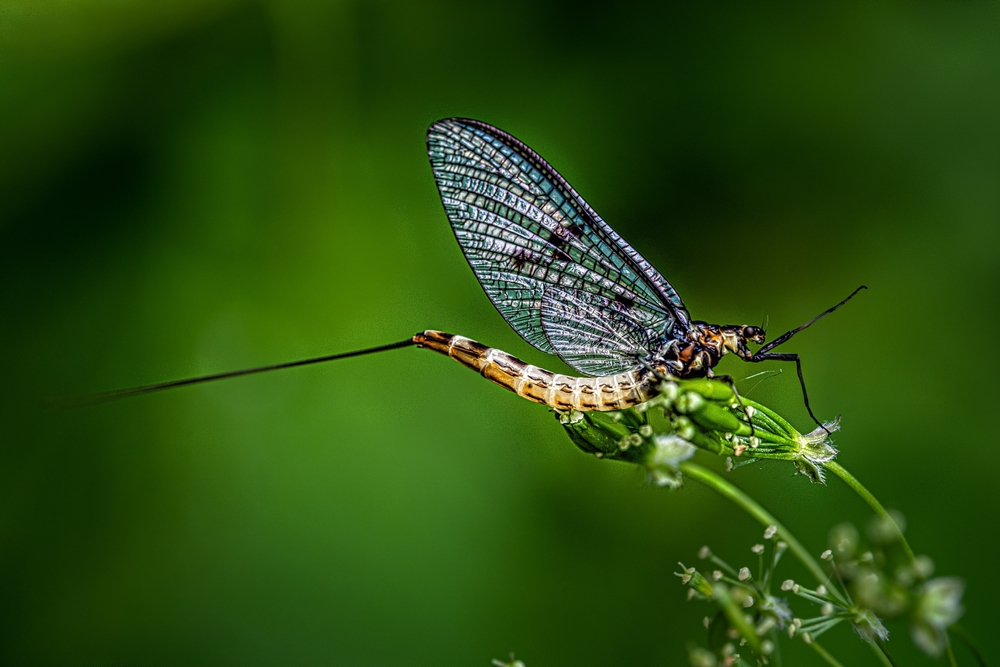
Mayflies are elongated insects with dull colored bodies, two or three tails, two pairs of transparent wings with the forewings larger than the hind wings, and flexible antennae. Mayflies hold their wings upright above their bodies when at rest, which helps distinguish them from other insects.
While they don’t pose direct health threats to humans, mayflies can:
- Cover windows and outdoor lighting.
- Trigger allergies in some people.
- Create slick walkways when their bodies accumulate.
- Attract spiders and other insect predators.
Understanding what causes mayflies to show up around your home is key to prevention.
Where do Mayflies Live?
Mayflies are fascinating insects. They spend the majority of their lives in freshwater bodies, such as lakes, ponds, rivers, and streams. These environments, especially those with clean water and abundant vegetation, provide the ideal habitat for mayfly larvae. Mayfly larvae, or nymphs, live among submerged plants and decaying plant matter, which is also what they eat. When mayflies reach adulthood, they leave the water, but they usually stay close.
Adult mayflies are attracted to light, with white incandescent fluorescent bulbs drawing large swarms during their brief mating season. These large gatherings can be a nuisance for people living near water, as the sheer number of mayflies can quickly overwhelm outdoor spaces.
What Do Mayflies Eat?
The diet of mayflies changes dramatically throughout their life cycle. As nymphs, mayflies feed on organic matter like decaying plant material, algae, and tiny insects.
Once mayflies reach adulthood, their relationship with food changes. Adult mayflies do not eat at all; they lack functional mouthparts and digestive systems. Instead, they rely on the energy reserves built up during their time as nymphs. Their sole focus as adults is reproduction, and their brief time above water is spent finding mates and laying eggs. Meanwhile, mayflies themselves become a valuable food source for many other insects, birds, and fish.
Why Are There So Many Mayflies?
Mayflies have a unique and fascinating life cycle that includes four distinct stages: egg, nymph, subimago, and adult. The process begins when female mayflies lay thousands of eggs directly into the water. These eggs hatch into nymphs, which live underwater for several months, feeding and growing as they prepare for the next stage of development.
After their time as nymphs, mayflies emerge from the water as subimagos, an immature adult form that still requires development before maturity. This stage is short-lived, and soon the mayflies change one final time to become sexually mature adults. Adult mayflies gather in large swarms, often in the evening, where mating takes place. After mating, female mayflies return to the water to lay their eggs, completing the cycle. The adult stage is incredibly brief, lasting only a few hours to a few days, after which both males and females die, leaving behind the next generation to continue the cycle.
Mayflies and Humans: Never to Be?
While mayflies are harmless to people, they don’t bite, sting, or carry diseases; their presence can still be a major inconvenience, especially during peak swarming season. Large swarms of mayflies are often attracted to outdoor lighting, particularly white incandescent fluorescent bulbs, which can draw hundreds or even thousands of these insects to porches, patios, and doorways. This can make outdoor spaces unpleasant and even create driving hazards when mayflies gather around streetlights.
To prevent mayflies from becoming a problem, it’s important to take proactive steps: use yellow bulbs for outdoor lighting instead of white, reduce standing water around your property, and keep your yard free of excess vegetation and debris. These measures can help reduce mayfly activity and make your outdoor spaces more enjoyable.
If you find yourself facing a persistent mayfly problem, consider professional pest control solutions to remove mayflies and prevent future infestations.
What Attracts Mayflies?
If you feel like your property is a mayfly magnet, you might be right. Several factors draw them in:
- Bright lights at night: Mayflies are phototactic, meaning they’re drawn to light. Mayflies are attracted to certain types of lighting, especially mercury vapor lamps. Porch lights, floodlights, and even interior lighting can attract them.
- Proximity to water: Living near a lake, river, pond, or even a fountain makes your property more susceptible.
- Moisture and humidity: Damp conditions are ideal for mayfly development.
Environmental conditions and environmental factors such as water quality, temperature, and humidity also influence mayfly emergence and how likely they are to be attracted to your property. Understanding these triggers can help you figure out how to prevent mayflies before they become a problem.
How To Get Rid of Mayflies Outside
If you’re dealing with a serious mayfly infestation, start outside.
- Change Outdoor Lighting: Use yellow “bug lights” or sodium vapor bulbs instead of bright white lights, which are less attractive to mayflies; replacing mercury vapor lamps with these alternatives can significantly reduce mayfly attraction.
- Time Your Outdoor Activities: Mayflies are most active at dusk and dawn. Avoid turning on exterior lights during these times.
- Use Fans on Patios: A strong breeze deters mayflies, who are weak flyers. Installing ceiling or box fans on patios can make a noticeable difference.
- Power Wash Surfaces: If you’ve had a swarm, you may need to power wash siding, driveways, or decks to remove debris and reduce the risk of slick surfaces.
- Limit Water Features: If practical, reduce or cover ornamental water features during mayfly season to make your property less attractive to these insects.
How To Get Rid of Mayflies in the House
Once mayflies find their way indoors, you’ll want to act fast:
- Turn off interior lights near open windows or doors.
- Use a handheld vacuum to remove visible insects quickly.
- Seal cracks and gaps around windows, doors, and vents to keep more from coming in.
- Use fine mesh screens and keep them tightly fitted.
Although they die off quickly, no one wants bugs flying around their living room.
How Do You Prevent Mayflies Long-Term?
The key to preventing mayflies is consistent attention and maintenance:
- Replace exterior bulbs with warm-colored lights.
- Install motion sensors to minimize unnecessary lighting.
- Repair or replace broken screens and caulk gaps.
- Reduce standing water near your home to help prevent mayfly eggs from hatching and developing into nymphs.
- Trim vegetation to increase airflow and reduce moisture.
- Reach out to Solve Pest Pros for effective pest control.
Understanding the typical emergence period of mayflies can help you time prevention efforts more effectively, as their predictable life cycles are influenced by environmental conditions and seasonal patterns. And remember, prevention is often more effective than trying to react once a swarm hits.
Don’t Let Mayflies Take Over—Call Solve Pest Pros
While mayflies might be harmless individually, they’re overwhelming in numbers. If you’ve dealt with repeated mayfly infestations or noticed mayflies sticking around longer than usual, it’s time to act. Whether you’re trying to enjoy your deck at dusk or simply want a bug-free entrance to your home, our team at Solve Pest Pros is here to help. At Solve, we know how to eliminate mayflies, and we’ll create a personalized prevention plan tailored to your lifestyle and location.